Christian Pfeiffer collaborates with Heidelberg Materials on the Carbon4Minerals project to pioneer sustainable cement production
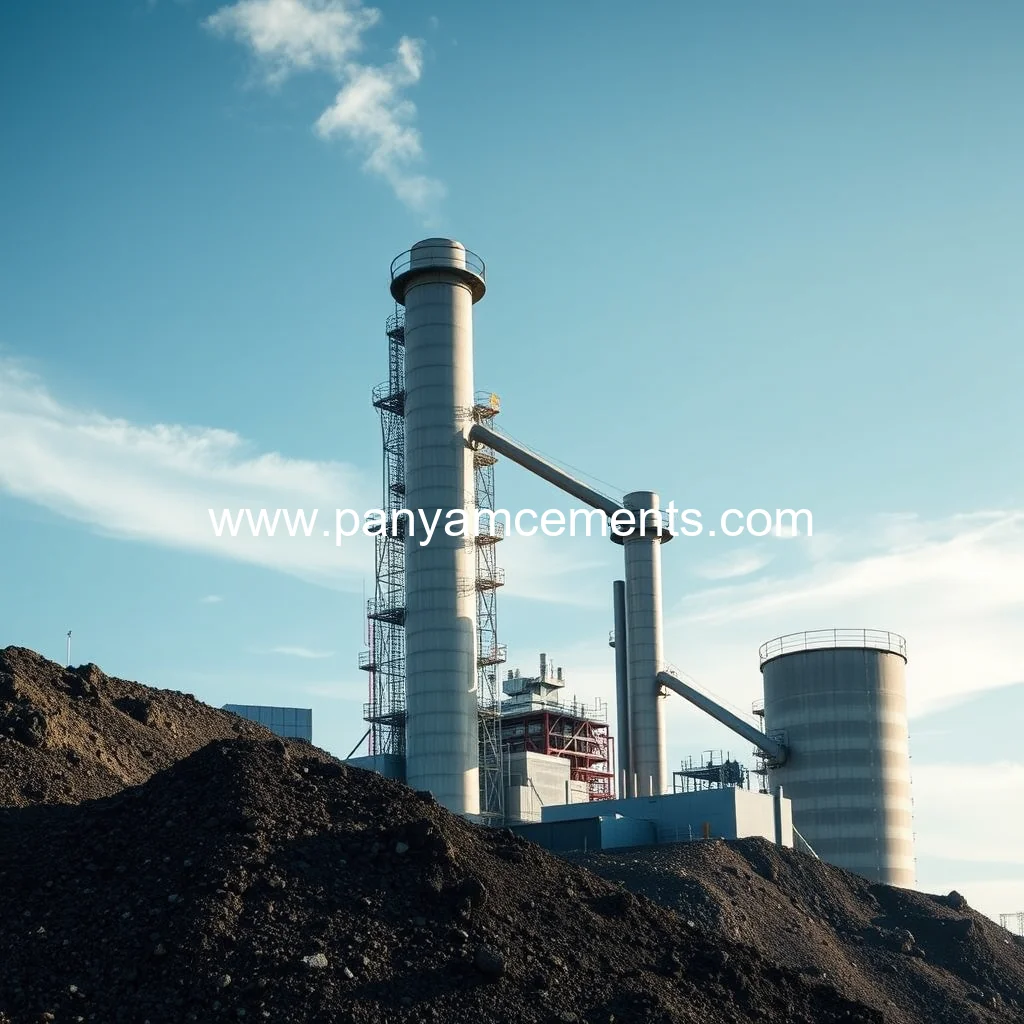
The Challenge of Reducing CO2 Emissions
The production of cement is one of the largest contributors to greenhouse gas emissions, accounting for approximately 8% of global CO2 emissions. The cement industry’s reliance on fossil fuels and the high energy consumption required for the calcination process contribute to this significant environmental impact. As the world grapples with the challenges of climate change, the cement industry is under increasing pressure to reduce its carbon footprint.
The Role of Carbonation Technology
Carbonation technology has emerged as a promising solution to mitigate the environmental impact of cement production. This process involves the mineralisation of CO2 in flue gases from clinker production, which can be achieved through the use of Recycled Concrete Paste/Powder. The resulting composite cements exhibit lower CO2 emissions and improved sustainability.
Key Benefits of Carbonation Technology
The Industrial Pilot Plant
Christian Pfeiffer will contribute its expertise to an industrial pilot plant focused on upscaling carbonation technology. The project involves the mineralisation of CO2 in flue gases from clinker production, utilizing Recycled Concrete Paste/Powder. This process allows for the creation of new low-CO2 composite cements.
Project Objectives
Cement production’s massive carbon footprint threatens the environment and economy, prompting the need for sustainable alternatives.
The Problem of CO2 Emissions in Cement Production
Cement production is one of the largest sources of CO2 emissions globally, accounting for approximately 8% of global greenhouse gas emissions. The process of cement production involves the calcination of limestone, which releases CO2 into the atmosphere. This has significant environmental implications, including climate change and air pollution. The CO2 emissions from cement production are not only a concern for the environment but also have economic implications, such as increased energy costs and reduced competitiveness. The cement industry is under pressure to reduce its carbon footprint and transition to more sustainable practices.*
The Carbon4Minerals Project
The Carbon4Minerals project is a collaborative effort between the Cementos Argos company and the Fraunhofer Institute for Ceramic Materials and Systems. The project aims to develop a new type of cement that captures CO2 from the atmosphere and converts it into a stable solid mineral.
A New Era in Cement Production: Christian Pfeiffer and Heidelberg Materials Collaborate
The cement industry has long been a significant contributor to greenhouse gas emissions, with the production process being a major source of pollution. However, with the increasing focus on sustainability and environmental protection, companies like Christian Pfeiffer and Heidelberg Materials are working together to develop innovative solutions.
The Challenge of Cement Production
Cement production is a complex process that involves the combination of limestone, clay, and other minerals to create a binding agent for concrete. The process requires high temperatures, which can lead to energy consumption and greenhouse gas emissions.