
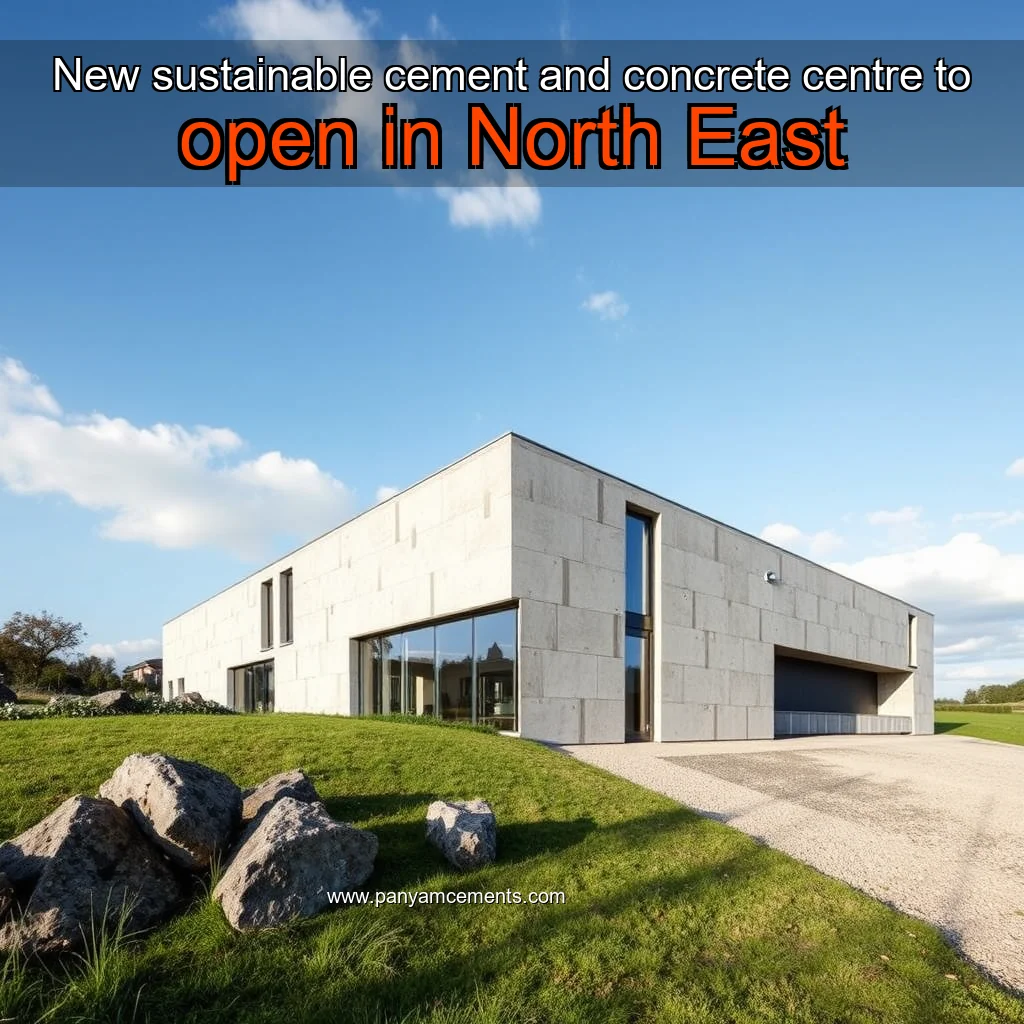
The New Facility: A Hub for Low-Carbon Innovation
The Materials Processing Institute is set to unveil a £1 million facility later this month, marking a significant milestone in the development of low-carbon cement and concrete formulations.
The backbone of the UK’s construction industry, providing a solid foundation for the country’s economy.
The construction industry is the largest consumer of these materials, accounting for over 70% of the total consumption. The remaining 30% is used in other sectors such as infrastructure, transportation, and energy.
The Importance of Concrete and Cement in the UK Economy
A Vital Component of the Construction Industry
Concrete and cement are the backbone of the UK’s construction industry, which is a significant contributor to the country’s GDP. The industry’s reliance on these materials is evident in the massive quantities used annually. In fact, more than 90 million tonnes of concrete and cement are consumed every year, with the construction sector accounting for over 70% of this total.
Key Statistics
The Role of Concrete and Cement in Infrastructure Development
Concrete and cement play a crucial role in the development of infrastructure in the UK. From roads and bridges to buildings and public transportation systems, these materials are essential for creating and maintaining the country’s infrastructure. The use of concrete and cement in infrastructure development is not limited to the construction of new buildings and roads. They are also used in the repair and maintenance of existing infrastructure, ensuring that the country’s transportation networks and public services remain functional and efficient.
Benefits of Concrete and Cement in Infrastructure Development
The SCCC is a collaborative effort between the University of Cambridge, the University of Oxford, and the University of Warwick, with the support of the European Union’s Horizon 2020 programme.
The SCCC: A Collaborative Approach to Sustainable Consumption and Production
The Sustainable Consumption and Circular Economy (SCCC) project is a groundbreaking initiative that brings together three of the world’s leading universities – the University of Cambridge, the University of Oxford, and the University of Warwick – to tackle the pressing issue of sustainable consumption and production. As part of the wider EconoMISER programme, led by the Foundation Industries Sustainability Consortium, the SCCC is a collaborative effort that aims to promote sustainable consumption patterns and reduce waste in the production and consumption of goods and services.
The SCCC’s Key Objectives
The SCCC project has several key objectives that are designed to address the complex challenges of sustainable consumption and production.