
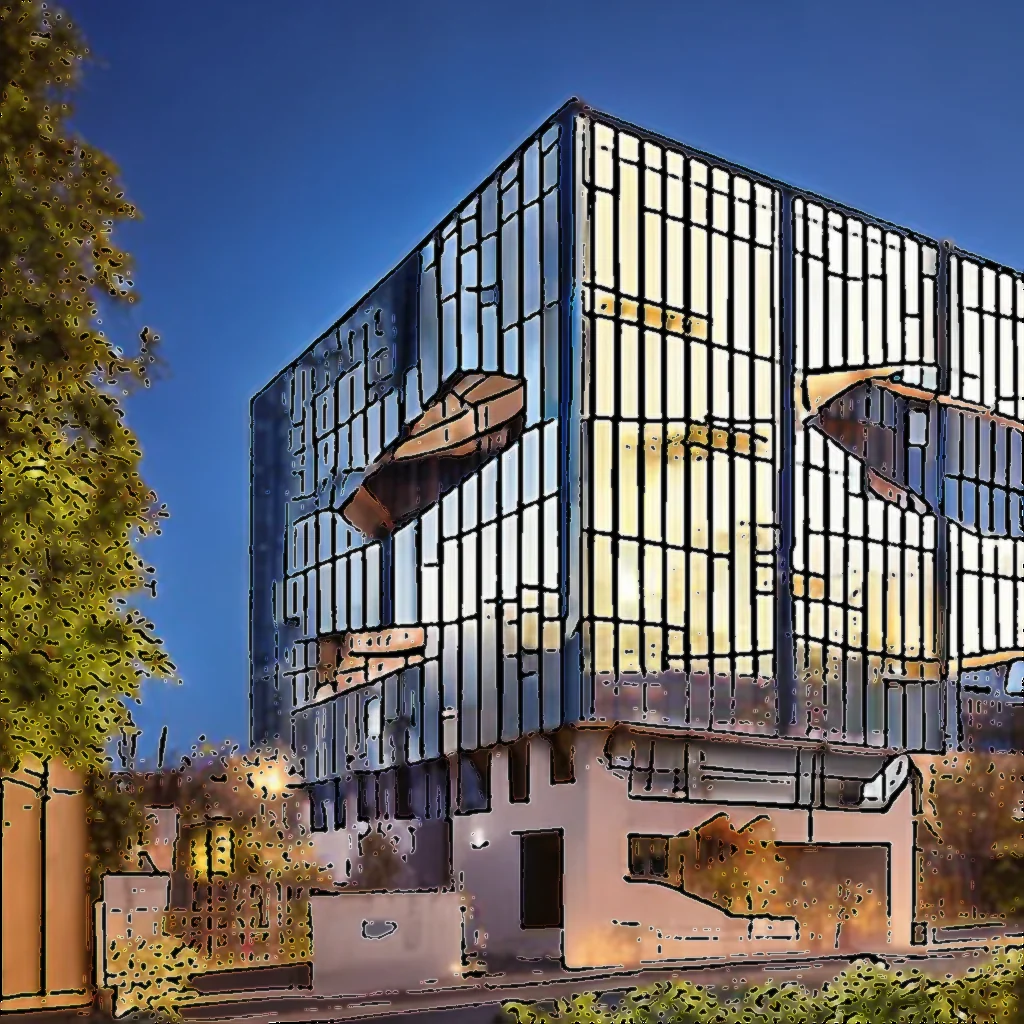
The Building Awards are a celebration of excellence in the built environment, recognizing the best and brightest in architecture, engineering, and construction. The Net Zero Award recognizes projects that demonstrate a commitment to achieving net zero carbon emissions. This award is a testament to the growing importance of sustainability in the built environment.
* **Water Resilience:** The building is designed to withstand extreme weather events and minimize water usage.
The project’s design focused on maximizing daylighting and natural ventilation, reducing reliance on artificial lighting and HVAC systems. This approach minimized energy consumption and environmental impact. The project’s location, situated in a densely populated urban area, presented unique challenges. The architects had to consider the impact of the building’s design on the surrounding environment and the needs of the local community.
The project’s innovative features include:
Chetwoods Architects and Baytree Logistics Properties, Baytree Nuneaton Baytree Nuneaton, completed in November 2023, is a pioneering 1,000,000ft2 industrial and logistics project featuring one of the UK’s largest timber structures. The development includes a 30,000ft2 three-storey timber office, showcasing innovative sustainable design. With a focus on carbon reduction, the project achieved a 14,554-tonne CO2e whole-life carbon reduction over 30 years. The timber office alone sequesters 1,000 tonnes of CO2e. The scheme also prioritises community engagement, supporting local initiatives and providing facilities for public use. This exemplar project sets new standards for sustainability in the industrial sector. Cundall, Eden, New Bailey
The building, designed by architects Foster + Partners, is a testament to the potential of green building practices. It boasts a range of innovative features that contribute to its sustainability, including a highly efficient energy system, rainwater harvesting, and a green roof. Eden’s energy system is a key element of its sustainability.
## Summary of Paddington Central Redevelopment:
A sustainable urban redevelopment within London’s Paddington Central, showcasing innovative use of earth friendly concrete (EFC®) to reduce embodied carbon. The project demonstrates the power of early stakeholder collaboration and pre-construction trials. ## Detailed Text:
Paddington Central, a bustling hub of activity in London, is undergoing a significant redevelopment.
chief executive, Federation of Master Builders; Rachel Bell, director of partnerships, Stride Treglown; director of partnerships, Stride Treglown; Anna Clarke, director of policy and public afffairs, Housing Forum; director of policy and public afffairs, Housing Forum; Mark Cleverly, partner, CPC; partner, CPC; Joanne De La Porte, senior sirector – project management, Gleeds; senior sirector – project management, Gleeds; Katy Dowding, CEO and president, Skanska UK; CEO and president, Skanska UK; Karen Gidwani, partner, Fenwick Elliott; partner, Fenwick Elliott; Kay Hughes, design director, HS2; design director, HS2; Ellie Jenkins, partner, Akerlof; partner, Akerlof; Félicie Krikler, director, Assael; director, Assael; Doris Lam, development director, EcoWorld London;
development director, EcoWorld London; Liz Male, founder, LMC; founder, LMC; John Marland, chief development officer, Bruntwood; chief development officer, Bruntwood; Flan MacNamara , construction director, Sellar; , construction director, Sellar; Kamran Moazami, executive managing director, property & buildings, WSP; executive managing director, property & buildings, WSP; Robin Nicholson, fellow, Cullinan Studio; fellow, Cullinan Studio; Iain Parker, director, T&T Alinea, director, T&T Alinea, Simon Rawlinson, head of strategic research and insight, Arcadis; head of strategic research and insight, Arcadis; Mark Robinson, chief executive, Scape Group; chief executive, Scape Group; Veronica Senior, senior manager global captial projects, Lloyd’s; senior manager global captial projects, Lloyd’s; Scott Sanderson, partner, PRP;
partner, PRP; Neal Shasore, head of school | CEO, London School of Architecture; head of school | CEO, London School of Architecture; Trudi Sully, UK & Europe lead – industrialised design & construction, Mott MacDonald UK & Europe lead – industrialised design & construction, Mott MacDonald Lynne Sullivan, chair, National Retrofit Hub; chair, National Retrofit Hub; Gauri Talathi-Lamb, chief executive, FHP ESS; chief executive, FHP ESS; Martha Tsigkari, senior partner and head of the applied R+D group, Fosters + Partners, senior partner and head of the applied R+D group, Fosters + Partners, Jo Wright, director, Perkins&Will Greencore Homes, Hook Norton Community Land Trust
The Hook Norton project in Oxfordshire showcases 12 ultra-low-energy, net zero carbon homes built through collaboration between Greencore Homes, Hook Norton Community Land Trust, Charlie Luxton Design, SNRG and Soha Housing. The climate-positive homes feature closed timber-frame panels insulated with natural materials, meeting Passive House Institute’s low-energy building standards. A microgrid solution optimises energy usage from solar panels. The project prioritises affordability, sustainability and community engagement through innovative financing and design. With a mix of affordable rental and shared-ownership units, the development aims to provide low carbon, healthy living for local people while serving as a model for sustainable residential projects.
The project, completed in 2022, showcases the potential of repurposing existing buildings for a greener future. **Key Features:**
* **Net Zero Carbon:** Quadrum Global achieved net zero carbon emissions through a combination of renewable energy sources, energy-efficient design, and waste management strategies. * **Sustainable Materials:** The building utilizes sustainable materials like timber, recycled content, and locally sourced materials, minimizing its environmental impact.
The project also highlights the importance of community engagement and stakeholder involvement, fostering a collaborative approach to sustainable development. This project is a groundbreaking example of how sustainability can be integrated into building design and construction, demonstrating the importance of a holistic approach that considers all aspects of the project lifecycle. Let’s dive deeper into each of these points:
The project team consisted of 100 people, with a diverse range of skills and expertise. The project was managed by a dedicated project manager, who ensured the project stayed on track and within budget. The project team was comprised of various specialists, including software developers, data analysts, and UX designers. Each specialist played a crucial role in the development of the new product.