
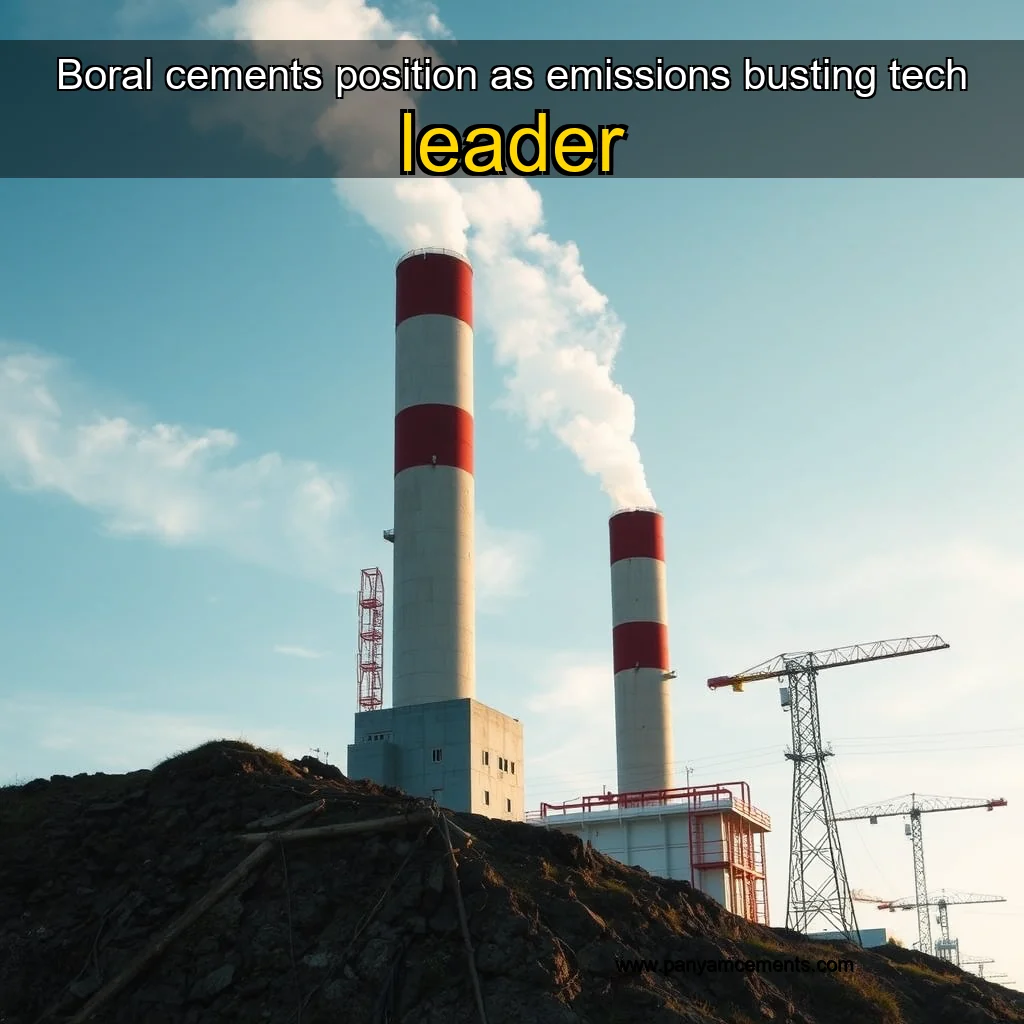
The New Berrima Plant: A Beacon of Sustainability
The New Berrima plant, located in the picturesque Southern Highlands of New South Wales, Australia, has been upgraded with cutting-edge carbon-reducing technology. This milestone marks a significant step forward in Boral Cement’s commitment to reducing its environmental footprint.
The Challenge of Carbon Emissions
The cement industry is one of the largest contributors to greenhouse gas emissions, accounting for around 8% of global emissions. The production process involves the calcination of limestone, which releases carbon dioxide into the atmosphere. This has led to increased pressure on companies like Boral Cement to reduce their carbon emissions and adopt more sustainable practices.
The Upgrade: A New Era of Sustainability
Boral’s New Berrima plant has been upgraded with a state-of-the-art carbon-reducing technology that utilizes advanced materials and processes to minimize emissions. This technology is designed to reduce the plant’s carbon footprint by up to 30% compared to traditional methods.
Key Features of the Upgrade
The Impact of the Upgrade
The upgrade at the New Berrima plant is expected to have a significant impact on the environment.
The Australian Government’s Emissions Reduction Plan
The Australian Government has announced a new plan to reduce the country’s carbon emissions, aiming to cut greenhouse gas emissions by up to 150,000 tonnes a year. This move is in line with the country’s commitment to the Paris Agreement, which sets a global target of limiting warming to 1.5 degrees Celsius above pre-industrial levels.
The Market’s Demand for Emissions Reduction
The Australian market is increasingly demanding serious action on emissions. Climate Change and Energy Minister Chris Bowen stated that the market is “clearly telling us that we need to take action” on emissions.
This process releases large amounts of carbon dioxide into the air, contributing to climate change.
The Need for Sustainable Cement Production
The cement industry is one of the largest contributors to greenhouse gas emissions, accounting for around 8% of global emissions. The production process involves burning fossil fuels at extremely high temperatures, which releases massive amounts of carbon dioxide into the atmosphere. This not only contributes to climate change but also has severe environmental and health impacts.
The Benefits of Alternative Fuels
The Upgrade and Its Impact
The upgrade at the site will enable the use of alternative fuels to reach 60% of the total energy mix over the next three years.
It involves the use of a gas that is used to remove chlorine from the cement kiln’s exhaust gases. This gas is produced by the reaction of the cement kiln’s fuel with the kiln’s exhaust gases. The chlorine bypass system is designed to reduce the amount of chlorine in the exhaust gases, which in turn reduces the amount of sulfur dioxide emissions.
The Benefits of the Chlorine Bypass System
Reducing Emissions
The chlorine bypass system is a key component in Boral’s efforts to reduce its environmental footprint. By reducing the amount of chlorine in the exhaust gases, the system helps to minimize the amount of sulfur dioxide emissions. Sulfur dioxide is a major contributor to acid rain and air pollution, making it a significant environmental concern. The chlorine bypass system has been shown to reduce sulfur dioxide emissions by up to 90%. By reducing sulfur dioxide emissions, the system also helps to minimize the formation of acid rain. The system’s ability to reduce sulfur dioxide emissions makes it an attractive option for cement manufacturers looking to reduce their environmental impact.
Energy Efficiency
The chlorine bypass system is also designed to improve the energy efficiency of the cement-making process.
Every day, our editors and journalists bring you the latest news, analysis, and commentary on the issues that matter most.
The Importance of Local News
In today’s digital age, it’s easy to get caught up in the global news cycle and forget about the importance of local news.
Improve Your Reading Comprehension and Vocabulary with Today’s Paper.
Understanding the Purpose of Today’s Paper
Today’s Paper is designed to provide a digital replica of today’s Daily Paper, which is a collection of news articles and stories from around the world. The primary purpose of Today’s Paper is to help individuals improve their reading comprehension and vocabulary skills. By providing access to a vast array of news articles, Today’s Paper aims to broaden readers’ perspectives and foster a deeper understanding of global events.
Key Features of Today’s Paper
How Today’s Paper Works
Today’s Paper is a user-friendly platform that allows individuals to access news articles and stories from around the world. The platform is designed to be easy to use, with a simple and intuitive interface that makes it easy for users to navigate and find the content they’re interested in.